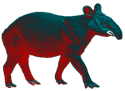
We organize field expeditions that help us to know more about the current distribution of the mountain tapir, learn about the problems faced by their populations in different areas where it is present and plan strategies to mitigate the threats that put at risk its conservation in different places where it still survives. The expeditions are possible thanks to the participation of people from around the world interested in supporting our work while living a unique experience exploring the tapir’s lands under the guidance of members of our team.
We began our expedition in Bogotá, the capital of Colombia, from where we drive to the north of Huila department, where we make a first stop in the Tatacoa desert, an important paleontological site with fossils from the middle miocene (13,8-12 mya). Next day we continue to San Agustin, know mainly because of the archeological sites. However, not so many people know the importance of the area as a wildlife refuge not only for the mountain tapir, but for many other landscape species like the spectacled bear and the puma. There we’ll share with a local community that monitors the mountain tapir population present in the area.
Our next destination will be a visit to Puracé National Park, which is another important area of distribution for the mountain tapir. There we could stay at the park and explore around looking for signs of mountain tapir presence while helping to collect information to feed the databases of the Park. A direct observation of the species although difficult is possible in the open paramo.
After Puracé we’ll visit the city of Popayan, from where we travel to Cali, to visit Cali Zoo, one of the only three zoos in the world with mountain tapirs. There you can meet Mayito and Sedona and there it could be posible to volunteer at the zoo for one day.
After Cali, we’ll travel to the coffee region where we’ll visit the Otun river watershed, where an important population of mountain tapirs lives at Ucumari Regional Park. Due to the high density of mountain tapirs in the area, there could be possible to watch them with some luck. We’ll stay at El Cedral, a good spot also for bird watching. We’ll meet a local NGO who works for the conservation of wild animals in the area, including the mountain tapir.
A mountain tapir photographed at Otun River Watershed
We use our own and third-party cookies to ensure the website works properly, measure usage, and improve our services. You can accept all cookies, reject non-essential cookies, or configure your preferences. Cookie policy
Configure cookies
Required for the website to work correctly. They cannot be disabled from this panel.
Help measure site usage and improve its content.
Allow advertising, campaign measurement, or ad personalization.
Store preferences or enable non-essential external content.